Mediation analysis tests whether an intermediate variable (mediator) explains the relationship between a predictor and an outcome.
Use mediation analysis when you want to:
-
Test if a omics feature(protein) mediates the effect of another omics feature(gene) on a phenotype
-
Determine if a omics feature(metabolite) explains the relationship between another omics feature (microbiome) and disease
-
Quantify direct vs. indirect effects in multi-layer molecular pathways
-
Move from correlation discovery to mechanistic hypothesis testing
Example: You find that gene expression correlates with disease severity. Mediation analysis can test whether protein abundance mediates this relationship, revealing the mechanistic pathway: Gene → Protein → Disease.
OmicsAnalyst 2.0 provides two integrated ways to perform mediation analysis.
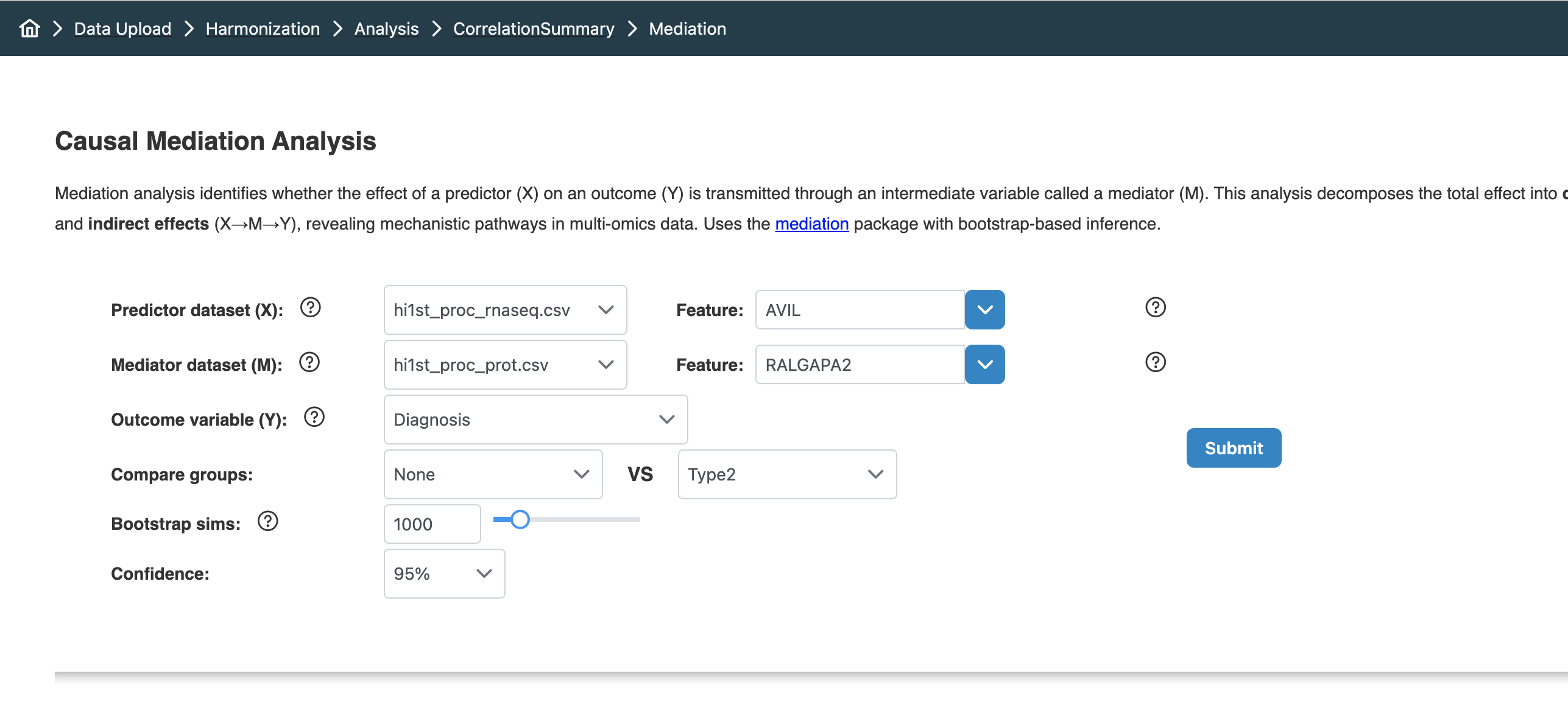
- Feature-Driven Mediation:
This workflow starts from biologically meaningful features identified through differential analysis or functional enrichment. Users can directly select predictor and mediator features on the “Mediation” page based on significant results from differential expression and enrichment analyses to test predefined biological hypotheses.
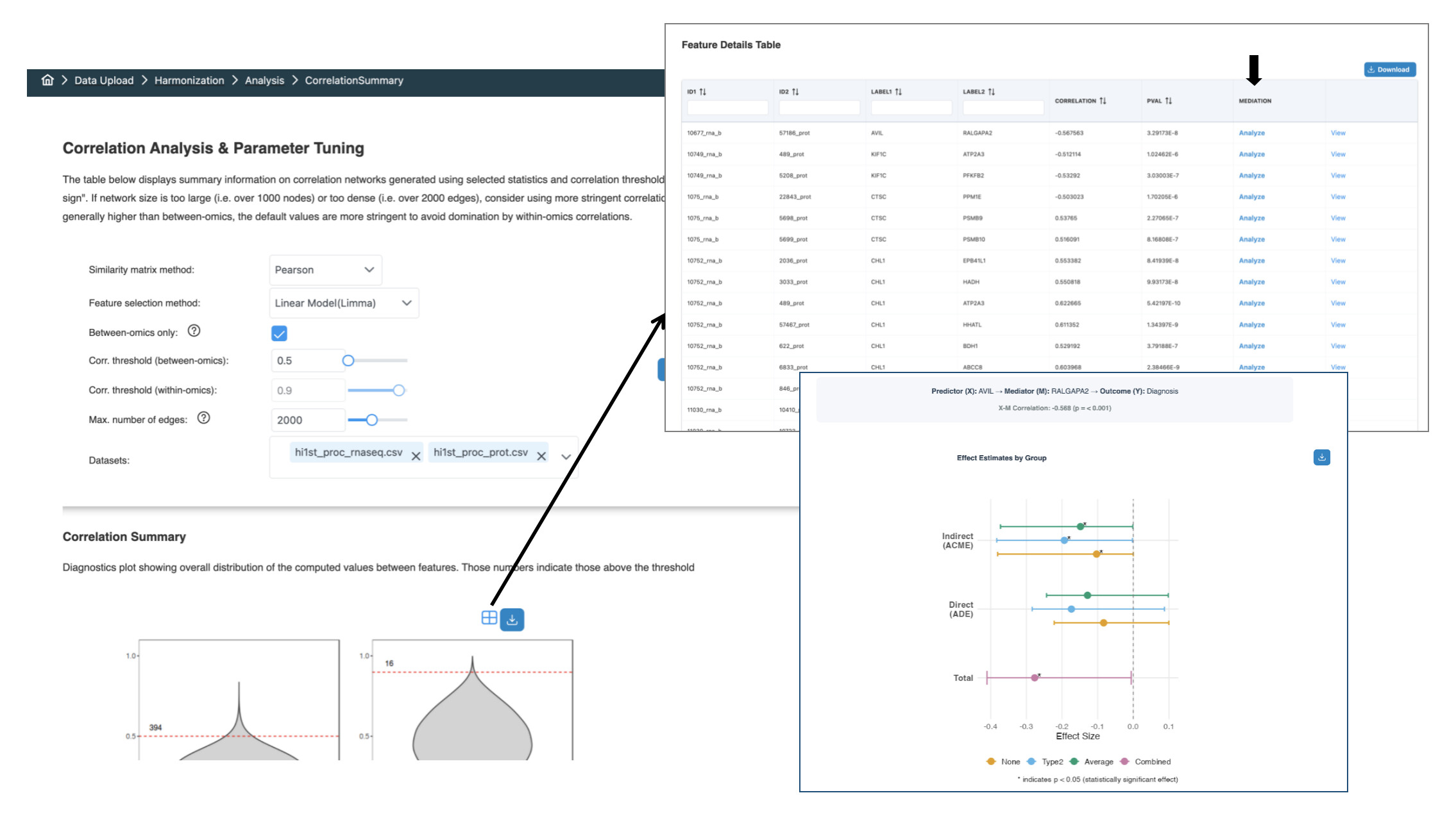
- Correlation-Driven Mediation:
This workflow starts from correlation analysis. Users can project significantly correlated cross-omics feature pairs into mediation analysis through the dedicated mediation column in the correlation result table, enabling systematic testing of data-driven causal hypotheses.